Projects
A selection of favorite art, tech, and community projects
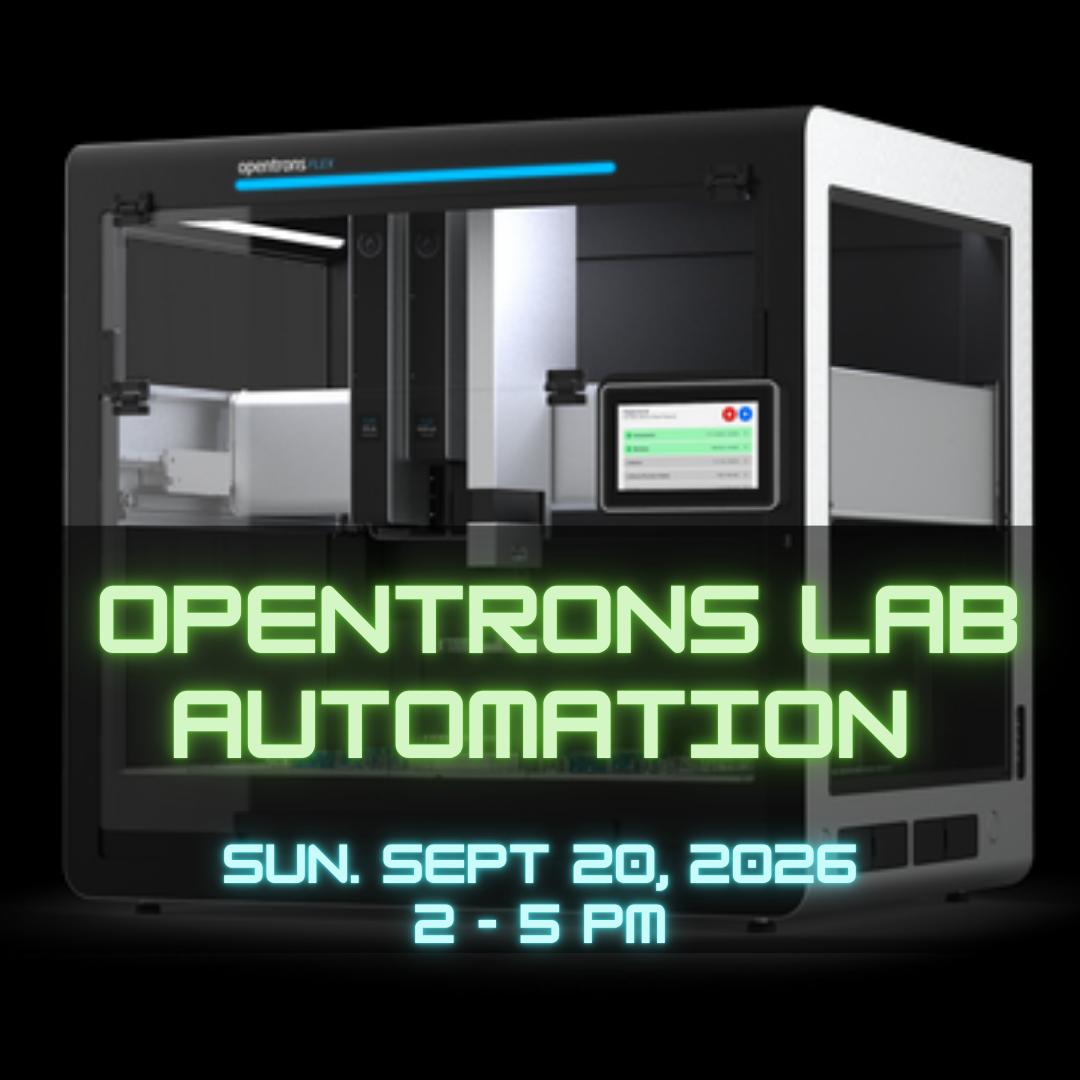
Hands-On Lab Automation Workshop
SoundBio Lab hosts an Opentrons Flex lab automation robot. Returning to my robotics roots, I created and taught a three-hour, hands-on workshop that introduced participants to what the Flex can make possible in the lab.
Participants used Protocol Designer to build and run an automated minimum inhibitory concentration (MIC) assay from start to finish: writing the protocol, creating custom labware, adjusting the gripper height in JSON,
working with both the 1-channel and 8-channel pipettes, and using both the Heater-Shaker and Absorbance Plate Reader modules. We also explored other assays that can be automated on the Flex.
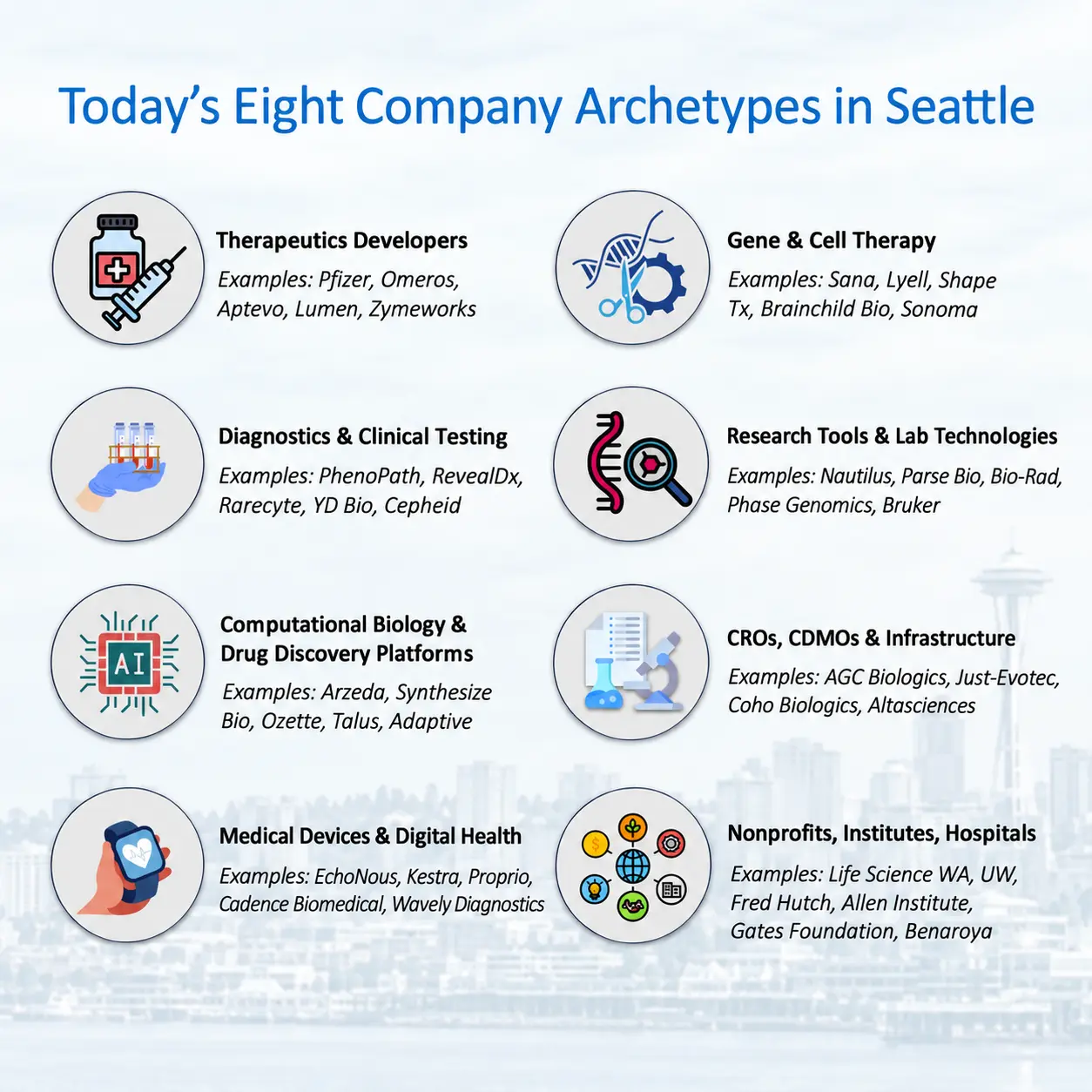
Seattle Biotech Landscape
In June 2026, I researched and delivered a 20-minute keynote for Biopharma PM on Seattle's biotech history, the company and institutional archetypes shaping today's ecosystem, investment and industry trends,
and the city's strengths and challenges as a biotech hub.

SoundBio Lab
After completing my Master's in Biotechnology, I wanted to expand my hands-on lab experience. This is how I found SoundBio Lab, a BSL-1 community biomakerspace that provides space, tools, and hands-on biology classes for
anyone in the greater Seattle area.
I've since taken classes in biomanufacturing, CRISPR, synthetic biology, and many other lab skills. This space is unique in how it lowers
barriers for people who want to explore hands-on science but have been held back by lack of access, imposter syndrome, or an inability to commit to a full-time educational program.
I joined the SoundBio Board in November 2025, and now serve as the Chair of Development. I also work closely with the education and outreach teams.
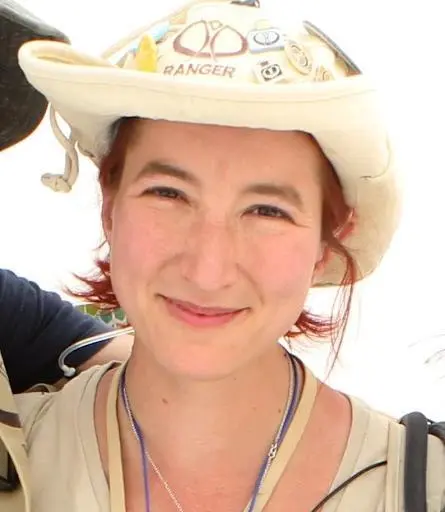
Black Rock Rangers
Black Rock Rangers are volunteers who support the Burning Man community by providing information, helping lost participants, mediating conflicts, being first on scene with emergencies, and connecting people with needed resources.
Rangering is a fantastic way to build conflict resolution skills, work alongside some truly remarkable people, and get comfortable engaging with strangers in all manner of bizarre situations.
I served as a Ranger from 2008 - 2019 in a wide range of roles, including Dirt Ranger, Green Dot, Mentor, Trainer, Sandman, Shift Lead, and Training Academy member, as well as working as the Communications Manager as part of the Ranger Council.
Piano Art Car
A few years ago, I decided that it was a shame that so few Burning Man mutant vehicles were interactive, and that what the world needed was a giant roving interactive piano art car.
I convinced a group of people that this needed to happen, and over the course of a few months, we built the Wandering Hands Piano Bar.
The final project was a 15' by 25' functional (via electric keyboards) grand piano built around the bed of a Ford F250. The front of the piano (back of the truck) had a platform with a piano bench that musicians could jump onto and start playing,
with a microphone for those who wanted to sing. The bed of the truck had a cushioned lounge area for the audience. We built speakers into the piano lid, lit up the contour with EL wire, and made a chandelier. It was a big hit!
Search and Rescue Land Navigation Hybrid Course
I strongly believe that new information sticks best when students arrive at an in-person class having already spent some time thinking or problem solving around the subject matter, and that an in-person class should build on and
reinforce existing neural pathways and frameworks, instead of having to forge them afresh.
I had been involved in SAR for a few years when several SAR members, our Land Navigation instructor, Carl, and I decided to create a set of online courses that covered the recurring classroom lectures.
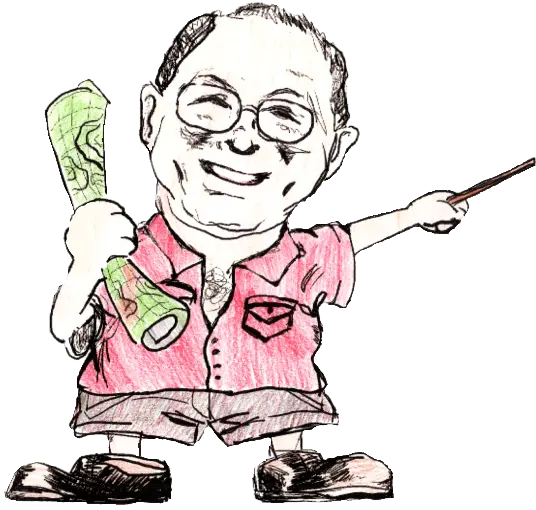
I created a three-part (Map, Compass, and GPS) Captivate course that combined lecture and hands-on navigation problems. The on-screen cartoon instructor was my friend Possu's rendition of Carl, and the course was voiced over by a few different SAR members.
The students would take the online course, complete a homework assignment, and only then come to the live class for additional training.
Everything needed to complete the assignment was in the online lecture, and the students could email the instructor list for additional help, but no one was allowed to enter the live class without the completed homework in hand.
The online course ended up getting used across SAR, and I became the Course Director and lead instructor for the navigation class for several years afterward.
Trashbot
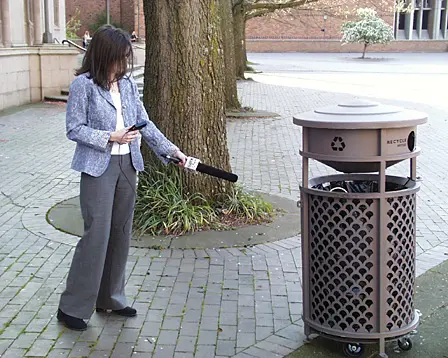
One April Fools, some of my friends and I decided to equip a trash can with wheels, motors, a mike and speaker, a webcam, and a squirt gun, and drive it around campus, begging passers-by for trash (and squirting non-compliers). The project went off brilliantly!
Here's an article about it in UW's Electrical Engineering news that calls it "one of the best April Fools stunts ever pulled off on campus."
FIRST Robotics
In my undergrad, I was the president of the UW/Roosevelt High School FIRST robotics team, a project that became my life for two years.
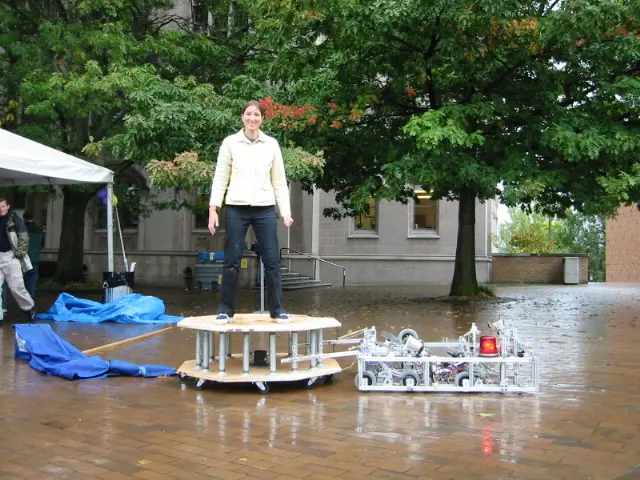
Each year, teams had six weeks to design and build a 6 x 4 ft robot to solve a task involving obstacle navigation and object manipulation.
Robots were subject to weight, size, parts, and budget constraints. All robots were crated and shipped to the competition at the 6 week mark, regardless of state of completion.
While the build cycle lasted only six weeks, the effort was year-round. Outside the build period, I recruited team members and coordinated training in machine shop skills, video editing, and 3D animation.
The build and travel expenses were around $55k per year, so I worked with a business school student who helped us write grant proposals and raise funds.
The six week build was intense: we had to develop a strategy, build prototypes, decide on a final direction, manufacture all of the parts in the machine shop, program and wire the electronics (including an autonomous mode), and constantly test and debug.
There were constant competing priorities; each subteam needed access to the robot to test or deploy their components, including the drivers, who needed to practice maneuvering it for the competion.
On top of the main robot build, we had to create a website and produce 3D animations and videos of the robot for sub-competitions.
My job was to lead the vision and strategic discussions, ensure that all of the subteams stayed aligned and that everyone had everything that they needed, make sure that each subteam was getting access to the robot at least for some time, manage budget,
fight any fires that came up, and pitch in where needed. I was constantly brainstorming, problem solving, working in the machine shop, running around getting parts, solving conflicts, talking frustrated team members off a cliff, and finding alternate pathways.
I loved every moment of the intensity, rapid creativity and problem solving, nonstop action, and having to be everything everywhere all at once.
After my second year, I co-authored and presented a paper on FIRST Robotics in the University Environment
at the 2004 Hawaii International Conference on Education.
Hands-On Lab Automation Workshop
SoundBio Lab hosts an Opentrons Flex lab automation robot. Returning to my robotics roots, I created and taught a three-hour, hands-on workshop that introduced participants to what the Flex can make possible in the lab. Participants used Protocol Designer to build and run an automated minimum inhibitory concentration (MIC) assay from start to finish: writing the protocol, creating custom labware, adjusting the gripper height in JSON, working with both the 1-channel and 8-channel pipettes, and using both the Heater-Shaker and Absorbance Plate Reader modules. We also explored other assays that can be automated on the Flex.
Seattle Biotech Landscape
In June 2026, I researched and delivered a 20-minute keynote for Biopharma PM on Seattle's biotech history, the company and institutional archetypes shaping today's ecosystem, investment and industry trends,
and the city's strengths and challenges as a biotech hub.
SoundBio Lab
After completing my Master's in Biotechnology, I wanted to expand my hands-on lab experience. This is how I found SoundBio Lab, a BSL-1 community biomakerspace that provides space, tools, and hands-on biology classes for
anyone in the greater Seattle area.
I've since taken classes in biomanufacturing, CRISPR, synthetic biology, and many other lab skills. This space is unique in how it lowers
barriers for people who want to explore hands-on science but have been held back by lack of access, imposter syndrome, or an inability to commit to a full-time educational program.
I joined the SoundBio Board in November 2025, and now serve as the Chair of Development. I also work closely with the education and outreach teams.
Black Rock Rangers
Black Rock Rangers are volunteers who support the Burning Man community by providing information, helping lost participants, mediating conflicts, being first on scene with emergencies, and connecting people with needed resources. Rangering is a fantastic way to build conflict resolution skills, work alongside some truly remarkable people, and get comfortable engaging with strangers in all manner of bizarre situations. I served as a Ranger from 2008 - 2019 in a wide range of roles, including Dirt Ranger, Green Dot, Mentor, Trainer, Sandman, Shift Lead, and Training Academy member, as well as working as the Communications Manager as part of the Ranger Council.
Piano Art Car
A few years ago, I decided that it was a shame that so few Burning Man mutant vehicles were interactive, and that what the world needed was a giant roving interactive piano art car.
I convinced a group of people that this needed to happen, and over the course of a few months, we built the Wandering Hands Piano Bar.
The final project was a 15' by 25' functional (via electric keyboards) grand piano built around the bed of a Ford F250. The front of the piano (back of the truck) had a platform with a piano bench that musicians could jump onto and start playing,
with a microphone for those who wanted to sing. The bed of the truck had a cushioned lounge area for the audience. We built speakers into the piano lid, lit up the contour with EL wire, and made a chandelier. It was a big hit!
Search and Rescue Land Navigation Hybrid Course
I strongly believe that new information sticks best when students arrive at an in-person class having already spent some time thinking or problem solving around the subject matter, and that an in-person class should build on and
reinforce existing neural pathways and frameworks, instead of having to forge them afresh.
I had been involved in SAR for a few years when several SAR members, our Land Navigation instructor, Carl, and I decided to create a set of online courses that covered the recurring classroom lectures.
I created a three-part (Map, Compass, and GPS) Captivate course that combined lecture and hands-on navigation problems. The on-screen cartoon instructor was my friend Possu's rendition of Carl, and the course was voiced over by a few different SAR members.
The students would take the online course, complete a homework assignment, and only then come to the live class for additional training.
Everything needed to complete the assignment was in the online lecture, and the students could email the instructor list for additional help, but no one was allowed to enter the live class without the completed homework in hand.
The online course ended up getting used across SAR, and I became the Course Director and lead instructor for the navigation class for several years afterward.
Trashbot
One April Fools, some of my friends and I decided to equip a trash can with wheels, motors, a mike and speaker, a webcam, and a squirt gun, and drive it around campus, begging passers-by for trash (and squirting non-compliers). The project went off brilliantly! Here's an article about it in UW's Electrical Engineering news that calls it "one of the best April Fools stunts ever pulled off on campus."
FIRST Robotics
In my undergrad, I was the president of the UW/Roosevelt High School FIRST robotics team, a project that became my life for two years.
Each year, teams had six weeks to design and build a 6 x 4 ft robot to solve a task involving obstacle navigation and object manipulation.
Robots were subject to weight, size, parts, and budget constraints. All robots were crated and shipped to the competition at the 6 week mark, regardless of state of completion.
While the build cycle lasted only six weeks, the effort was year-round. Outside the build period, I recruited team members and coordinated training in machine shop skills, video editing, and 3D animation.
The build and travel expenses were around $55k per year, so I worked with a business school student who helped us write grant proposals and raise funds.
The six week build was intense: we had to develop a strategy, build prototypes, decide on a final direction, manufacture all of the parts in the machine shop, program and wire the electronics (including an autonomous mode), and constantly test and debug.
There were constant competing priorities; each subteam needed access to the robot to test or deploy their components, including the drivers, who needed to practice maneuvering it for the competion.
On top of the main robot build, we had to create a website and produce 3D animations and videos of the robot for sub-competitions.
My job was to lead the vision and strategic discussions, ensure that all of the subteams stayed aligned and that everyone had everything that they needed, make sure that each subteam was getting access to the robot at least for some time, manage budget,
fight any fires that came up, and pitch in where needed. I was constantly brainstorming, problem solving, working in the machine shop, running around getting parts, solving conflicts, talking frustrated team members off a cliff, and finding alternate pathways.
I loved every moment of the intensity, rapid creativity and problem solving, nonstop action, and having to be everything everywhere all at once.
After my second year, I co-authored and presented a paper on FIRST Robotics in the University Environment
at the 2004 Hawaii International Conference on Education.